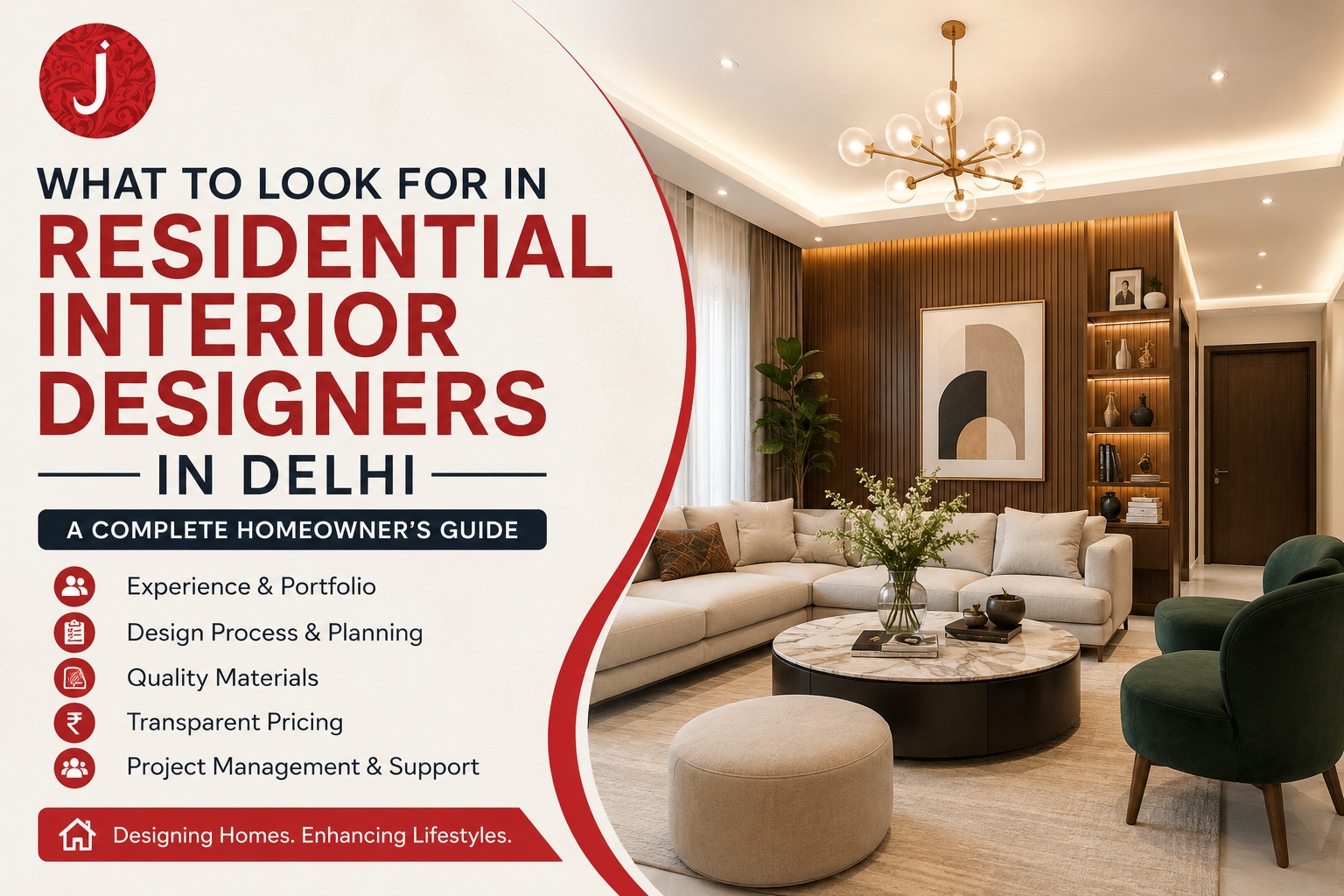
What to Look for in Residential Interior Designers in Delhi
Look for a Top Residential Interior Designers in Delhi who shows completed (not just rendered) projects similar to your home, understands your lifestyle, gives a transparent itemised quotation, explains their design-to-execution process clearly, and has verifiable client reviews. Don’t decide on portfolio photos or the lowest price alone — compare designers on experience, materials, space planning, project management, and communication.
Choosing the right Residential Interior Designer in Delhi is an important decision when you are building, renovating, or upgrading your home. A professional interior designer does much more than select colours, furniture, and décor — they understand your lifestyle, plan the available space, recommend suitable materials, manage execution, and turn your ideas into a home that’s practical to live in, not just nice to photograph.
With thousands of interior designers and firms across Delhi and Delhi NCR, comparing your options carefully can help you avoid unnecessary costs, delays, and design compromises. Here’s exactly what to look for before you hire one.
Why This Decision Matters
A well-matched designer helps you:
- Make better use of available space
- Improve storage and daily organisation
- Get lighting and layouts that work for how you actually live, not just how they photograph
- Choose materials suited to Delhi’s climate and daily wear
- Avoid expensive mistakes — wrong material, wrong layout, wrong vendor
The wrong choice usually doesn’t show up on day one. It shows up later as budget overruns, missed timelines, poor communication, or a home that looks good online but is frustrating to live in.
1. A Residential Portfolio That’s Actually Relevant
Don’t judge a designer on attractive renders alone. Check whether they’ve completed projects similar to yours:
- 2 BHK and 3 BHK apartments
- Villas and independent houses
- Builder floors and DDA flats
- Small-space and compact-home layouts
- Modular kitchens and wardrobes
- Full living room and bedroom designs
A designer known for large Gurgaon villas may not be the strongest fit for a compact flat in Rohini or Dwarka, where storage optimisation and multifunctional furniture matter more than statement pieces. Ask to see completed, occupied projects — ideally photographed a year or two after handover, not just on delivery day. That tells you more about real workmanship than a day-one render ever will.
2. Experience Across Different Types of Homes
Every home has different requirements. A compact apartment needs a different approach from a villa or independent house. An experienced residential designer should be comfortable working with:
- Available floor area and natural lighting
- Storage requirements and room circulation
- Electrical points, lighting design, and ventilation
- Family lifestyle and long-term maintenance needs
A designer with relevant residential experience should be able to flag potential problems during planning — not after execution has already started.
3. A Genuine Understanding of Your Lifestyle
Good interior design isn’t just about making a home look beautiful — it should work for the people who live in it. Before finalising a designer, notice whether they actually ask about:
- How many people live in the home, including children or elderly parents
- Whether you work from home and need a dedicated space
- How much storage you realistically need
- How often you entertain guests
- Your preferred design style and long-term plans
The more clearly a designer understands your lifestyle, the more personalised — and livable — the final design will be.
4. Strong Space-Planning Skills
In Delhi, where apartment sizes are tighter than most renders suggest, space planning is where good designers separate themselves from average ones. Look for skill in:
- Furniture placement and movement/circulation space
- Storage — full-height wardrobes, loft storage, under-bed storage
- Kitchen workflow between sink, stove, and storage
- Functional zoning, especially in open-plan layouts
5. A Clear, Explainable Design Process
A professional process usually looks like this:
- Initial consultation — lifestyle, requirements, and budget
- Site measurement — accurate measurement of the existing property
- Concept development — layout, theme, material direction
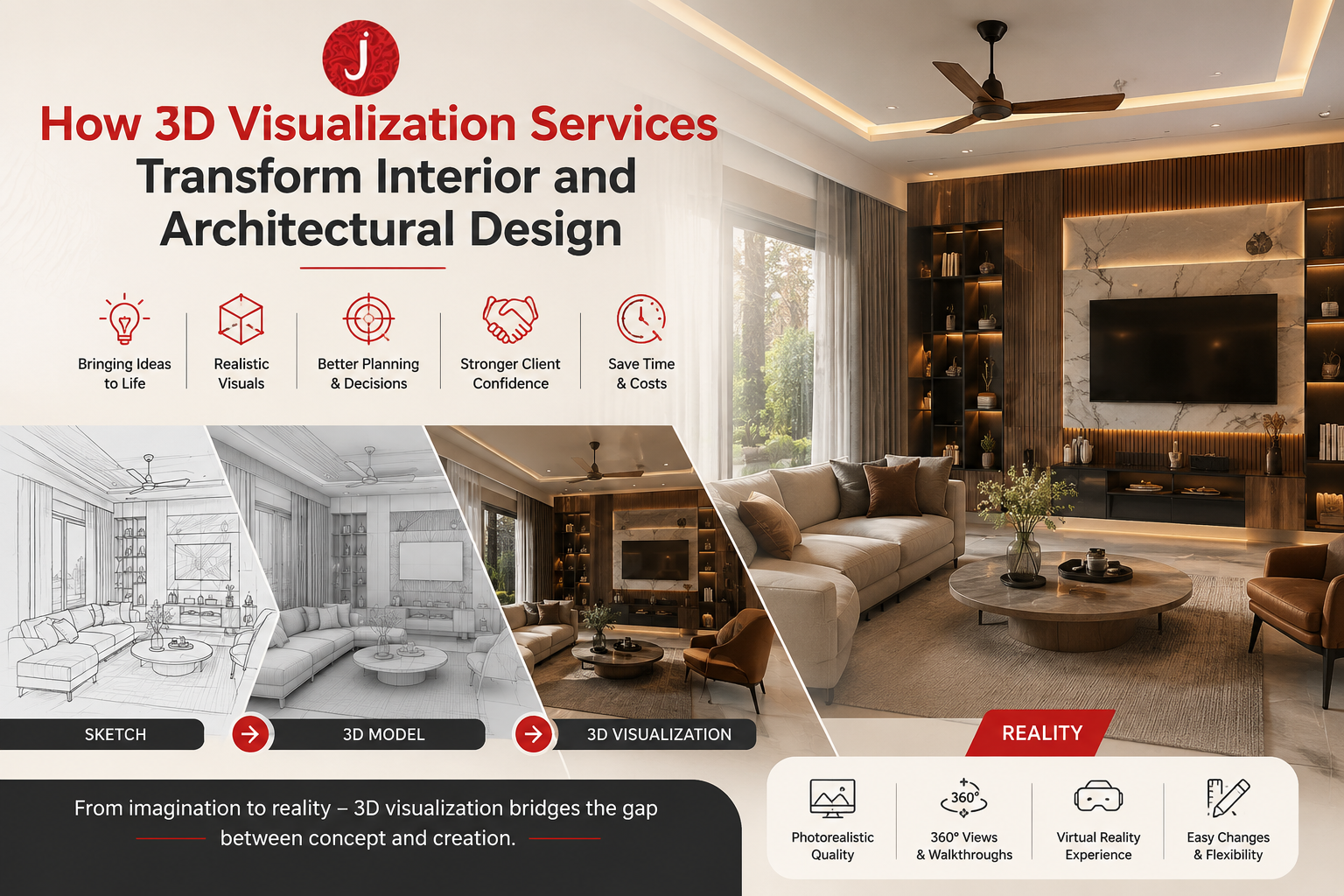
- 3D visualisation — so you see the design before committing
- Design refinement — based on your feedback
- Material selection and detailed drawings
- Execution — manufacturing, installation, site coordination
- Final handover — inspection and finishing fixes
If a designer can’t explain this in plain language, treat that as a signal — a vague process usually means vague communication later.
6. Quality of Materials They Recommend
Don’t select materials on appearance alone. Ask about durability, maintenance, warranty, and suitability for your specific space — for example:
- Plywood, MDF, laminates, and veneers
- Paint finishes and flooring
- Hardware, hinges, and drawer channels
- Kitchen and wardrobe materials, countertops, glass
- Lighting fixtures and bathroom fittings
A good designer explains why a material is recommended rather than just handing you a product list.
7. Transparent, Itemised Pricing
Two quotes that look “similar” can differ enormously in board type, hardware brand, and whether installation is even included. As a broad 2026 market reference for Delhi NCR (actual costs vary by scope, finish level, and materials — always request a written quote for your specific home):
| Home Type | Typical Full-Interior Range (Approx.) | What Drives the Range |
|---|---|---|
| 2 BHK apartment | ₹8–18 lakh | Modular kitchen grade, wardrobe finish, false ceiling extent |
| 3 BHK apartment / builder floor | ₹15–35 lakh | Number of wardrobes, civil work, lighting design |
| Villa / independent house | ₹35 lakh and above | Custom furniture, premium materials, multiple floors |
| Design consultation only | Flat fee or hourly rate | Designer’s experience and scope of advice |
Before comparing prices, ask each designer whether the quotation covers design fees, civil work, carpentry, electrical, plumbing, painting, false ceiling, modular kitchen, wardrobes, lighting, installation, transportation, and project management — or whether some of these get added later as “extras.”
8. Solid Project Management and Site Supervision
Multiple trades — carpenters, electricians, painters, fabricators — often work in parallel. Ask directly:
- Who supervises the site, and how often do they visit?
- Who coordinates between contractors?
- How are design changes handled mid-project?
- How are delays communicated to you?
9. Client Reviews With Specifics, Not Just Star Ratings
Look for reviews that mention execution quality, timely completion, communication, material quality, budget management, and post-project support — not just a rating. Where possible, ask to speak with a past client directly.
10. Strong, Two-Way Communication
You’ll make many decisions during the project, so communication matters. A good designer explains design concepts, materials, timelines, and costs in simple language — and listens to your ideas rather than imposing a fixed style on your home.
11. Real 3D Visualisation, With Revisions Included
3D visualisation helps you see wall colours, furniture, lighting, flooring, and ceiling design before execution begins. Ask how many rounds of revision are included, and whether the visuals reflect the actual materials being used — not generic stock renders.
12. A Contract That Actually Protects You
Never begin a major project without a written agreement covering project scope, materials, payment schedule, timeline, responsibilities, design revisions, warranty or after-sales support, and what happens if the scope changes. A clear agreement protects both you and the designer.
13. Genuine Local Knowledge of Delhi
Working with a designer who knows Delhi’s residential landscape gives you practical advantages, because it genuinely affects design decisions:
- DDA flats and older builder floors often have restrictions on load-bearing walls — confirm what can and can’t be structurally altered before finalising a layout.
- Independent houses and builder floors commonly need waterproofing and moisture-resistant materials on terraces and lower floors because of Delhi’s monsoon and heat cycles.
- Dust and pollution levels make washable, low-maintenance fabrics and surfaces more practical than delicate finishes for most Delhi homes.
- Peak summer heat makes ventilation planning and heat-resistant materials for false ceilings and window treatments worth discussing early, not as an afterthought.
A designer with real Delhi execution experience should be able to speak to these points without being prompted — it’s a quick way to test genuine local expertise in your first call. Local presence shouldn’t be the only deciding factor, but combined with portfolio quality, pricing transparency, and communication, it matters.
14. Value Over the Lowest Price
The lowest quotation is rarely the best option — it often means something is missing, added back later as an “extra.” Instead of asking only “who’s cheapest,” ask: “Who offers the best combination of design quality, materials, execution, communication, and value for my budget?”
15. Clear Answers to These Questions
Before signing an agreement, ask:
- How many residential projects have you completed?
- Can I see completed, occupied projects — not just renders?
- What exactly is included in your package?
- What materials do you recommend, and why?
- Is the quotation itemised?
- Who supervises the site day-to-day?
- What’s the estimated project timeline?
- How are design changes handled mid-project?
- What happens if additional work is required?
- What warranty or after-sales support do you offer?
How clearly and specifically a designer answers these is itself a useful signal.
Final Checklist Before You Hire
- [ ] Relevant residential experience and a genuine, completed-project portfolio
- [ ] Good understanding of space planning
- [ ] Clear design and execution process
- [ ] Transparent, itemised pricing
- [ ] Quality material options, explained rather than just listed
- [ ] Strong project management and reliable site supervision
- [ ] Positive, specific client feedback
- [ ] Clear, two-way communication
- [ ] Written project terms and contract
- [ ] Suitable warranty and after-sales support
Frequently Asked Questions
What should I look for in a residential interior designer in Delhi?
Look for a relevant portfolio of completed projects, a clear design-to-execution process, transparent and itemised pricing, strong project management, and verifiable client reviews. Prioritise designers who explain their reasoning clearly rather than the one with the lowest quoted price.
How much does residential interior design cost in Delhi?
As a broad market reference, a 2 BHK typically runs ₹8–18 lakh and a 3 BHK ₹15–35 lakh for full interiors; villas and heavily customised homes cost more. Actual cost depends on scope, materials, and finish level, so always request a written quote for your specific home.
What questions should I ask before hiring an interior designer?
Ask about relevant past projects, what’s included in their package, material specifications, timeline, payment schedule, and warranty terms. How clearly and specifically they answer is itself a useful signal of professionalism.
Should I hire an independent designer or a design firm?
Both can work well. Independent designers often give more personal attention on smaller projects, while larger firms typically offer stronger project-management systems for bigger or more complex homes. Compare actual deliverables rather than deciding by business type alone.
How long does a residential interior project take in Delhi?
Most full-home projects take 3–6 months depending on size, material availability, and the extent of civil and electrical work. Ask for a milestone-based schedule in writing rather than relying on a verbal estimate.
What’s the difference between interior design and interior decoration?
Interior design covers layout, functionality, materials, and lighting planning. Interior decoration focuses more narrowly on visual styling — colours, furnishings, and accessories. Many Delhi firms offer both under one roof.
Final Thoughts
Finding the right Residential Interior Designers in Delhi is about more than a good-looking portfolio. The best choice is a designer who understands your lifestyle, respects your budget, plans space well, communicates clearly, and has the local experience to execute the approved design properly. Take the time to compare portfolios, ask detailed questions, understand the quotation, and review the contract before deciding — it makes the entire project more predictable and far less stressful.
Recent Blog